
.svg)
.svg)


Managing overtime correctly is one of the most complex parts of payroll processing, particularly in Australia where Moden Awards often include multiple overtime triggers. To make this easier and more accurate, Microkeeper has recently updated how morning overtime interacts with daily overtime when both are enabled.
This update improves clarity, reduces edge-case errors, and ensures overtime is applied in a logical, Fair Work-aligned order. In this article, we explain what morning overtime and daily overtime are, why their interaction matters, what's changed, and how the updated behaviour works in real payroll scenarios.
What is morning overtime?
Morning overtime is a type of overtime that applies when an employee works before a defined start time, often referred to as early start or time-of-day overtime.
In many Australian awards, work performed in the early morning hours attracts higher rates due to unsociable hours. For example:
- Double time between midnight and 3:00 am
- Higher penalty rates between 3:00 am and 6:00 am
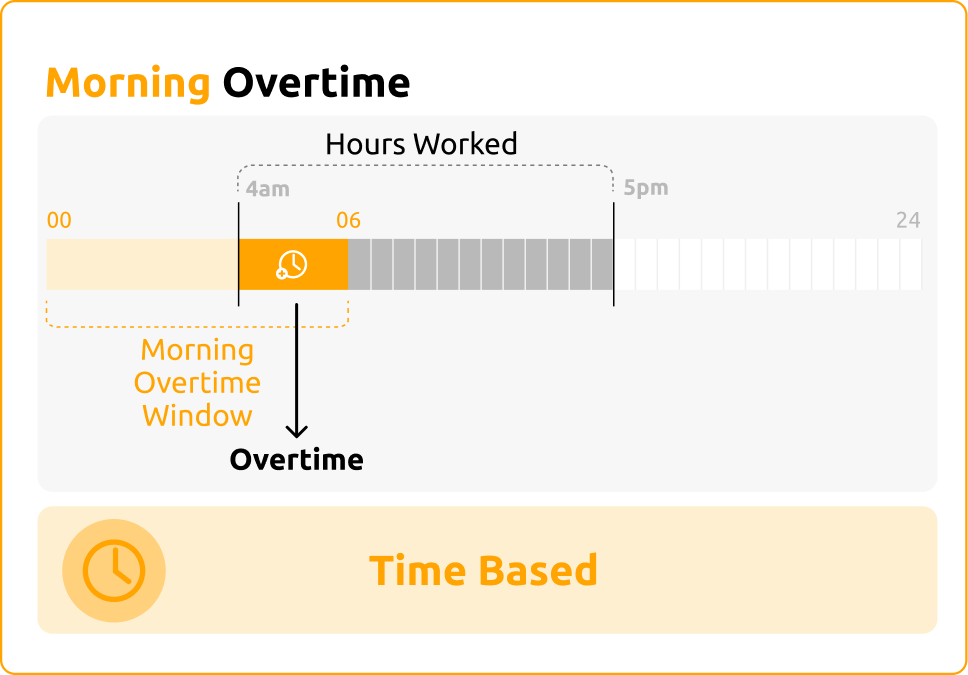
Morning overtime is time-based, not hour-based. It is triggered purely by when the work occurs, regardless of how many hours have been worked in total.
What is daily overtime?
Daily overtime applies when an employee works more than a specified number of hours in a single day.
Common daily overtime thresholds include:
- Overtime after 7.6 hours
- Overtime after 8 hours
- Tiered overtime (e.g. first 2 hours at time and a half, then double time)
.png)
Daily overtime is quantity-based, not time-based. It looks at the total hours worked in the day and applies overtime rates once the threshold is exceeded.
Why the interaction matters
Many awards allow both morning overtime and daily overtime to apply in the same shift. This creates a key question for payroll systems:
“When both conditions are met, which overtime applies first?”
Without clear rules, payroll calculations can:
- Double count overtime
- Apply the wrong gate
- Misallocate hours between penalty bands
- Create compliance risk
The recent update to Microkeeper clarifies this interaction and ensures overtime is applied consistently and transparently.
The core principle of the update
The updated behaviour follows a clear, logical order:
Morning overtime (time of day) is applied first.
Daily overtime is then calculated on the remaining hours worked.
This mirrors how most awards are interpreted in practice and aligns with Fair Work principles.
.png)
How it worked previously (high level)
Previously, in some edge cases, daily overtime could interfere with morning overtime bands when both were enabled. While the system calculated correct totals in most scenarios, certain long or early starting shifts could be harder to interpret when reviewing payroll breakdowns.
The update does not remove any functionality, it clarifies sequencing, making calculations easier to understand and audit.
How the updated interaction works
Let’s walk through the updated logic step by step.
Step 1: Morning overtime is applied by time of day
- The system first looks at the clock times worked and applies any morning overtime clauses.
For example:- Midnight to 3:00 am -> Double time
- 3:00 am to 6:00 am -> Early morning penalty
- 6:00 am onwards -> ordinary rate (unless another rule applies)
These hours are locked into their respective rates based on time of day.
Step 2: Daily overtime threshold is tracked
At the same time, the system tracks total hours worked across the day.Once the employee exceeds the daily overtime threshold (e.g. 7.6 hours), daily overtime begins to apply, but only to hours not already covered by a higher time-of-day rate.
Step 3: Daily overtime applies after morning bands are exhausted
- Daily overtime is applied after morning overtime hours have been counted.
This prevents:- Double application of overtime.
- Daily overtime overriding higher early-morning rates.
- Incorrect escalation of rates too early in the shift.

Practical example
Scenario
- Shift: 3:00 am to 4:00 pm
- Daily overtime threshold: 7.6 hours
- Morning overtime rules:
- 3:00 am to 6:00 am -> early morning rate
- After 7.6 hours -> time and a half for 2 hours, then double time
Breakdown
1. 3:00 am - 6:00 am
Applied as morning overtime (early morning rate)
2. 6:00 am - threshold reached
Counted as ordinary time
3. After 7.6 hours total worked
Daily overtime begins:
- First 2 hours at time and a half
- Remaining hours at double time
Each hour is classified once, using the highest applicable rule, in predictable order.
Why this matters for employers
This update helps employers by:
- Reducing compliance risk
Clear sequencing aligns with award interpretation and avoids accidental underpayments or overpayments. - Improving payroll transparency
Payroll breakdowns are easier to read and explain to employees, auditors, and accountants. - Handling complex shifts confidently
Long shifts that start early in the morning are now easier to manage without manual adjustments. - Supporting audits and reviews
Clear logic makes it easier to justify pay outcomes during Fair Work or internal audits.
Why this matters for employees
For employees, the update ensures:
- Early morning work is always paid at the correct higher rate.
- Daily overtime is applied fairly once thresholds are exceeded.
- No overtime hours are missed or misclassified.
- Payslips accurately reflect when and why higher rates apply.
This builds trust and reduces payroll disputes.
Common questions
- Does this change reduce overtime?
No. The update does not remove or reduce any overtime entitlements. It only clarifies how different overtime rules interact. - Do I need to reconfigure my rules?
In most cases, no. Existing morning overtime and daily overtime rules continue to work as configured. The interaction logic has simply been improved. - Does this apply to all awards?
The interaction applies wherever both morning overtime and daily overtime are enabled. The exact rates and thresholds still depend on the award or agreement you’ve configured.
Best practices when using morning and daily overtime together
To get the most accurate results:
- Clearly define time-of-day overtime bands.
- Ensure daily overtime thresholds match the applicable award.
- Avoid overlapping clauses that duplicate rates.
- Regularly review payroll breakdowns for long or early shifts.
- Document your award interpretations for audit purposes.
The updated interaction between morning overtime and daily overtime ensures payroll calculations follow a clear, award-aligned sequence: time-based overtime first, quantity-based overtime second.
This approach improves accuracy, transparency, and confidence when processing complex shifts, particularly those that start early and run long. By clarifying how these rules work together, Microkeeper helps Australian employers stay compliant while ensuring employees are paid correctly for every hour worked.

.png)